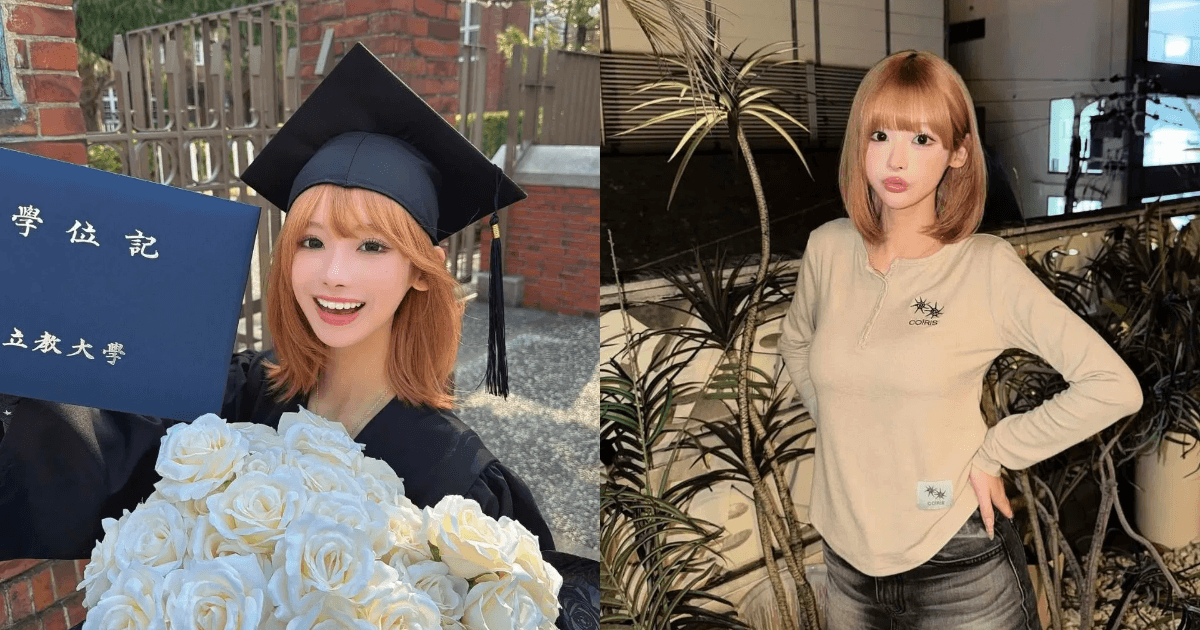
The Moment "Protecting Your Idol" Turns into an Attack: The Death Report of a Japanese K-POP Fan Highlights the Chain of Online Harassment
An incident over a bouquet of flowers quickly escalated into a major cross-border debate within days.
In early August 2026, reports emerged about the death of a Japanese woman known on social media as a fan supporting NI-KI, a Japanese member of the popular Korean boy group ENHYPEN.
According to foreign media, on the early morning of August 5, an emergency call was made in Yongsan District, Seoul, regarding a Japanese woman in her 20s with many followers on social media, and police confirmed her death at the scene. Multiple foreign media outlets reported this woman as Mina, and the Yongsan Police Station in Seoul is investigating the details.
However, there is something that must be emphasized first when conveying this incident.
On social media, the explanation that she "took her life due to online harassment" spread rapidly, but the police have not confirmed that online harassment was the direct cause of death. Additionally, NI-KI's statements, which drew attention during the commotion, have not been confirmed to have specifically named Mina.
When a tragedy occurs, people tend to seek clear "causes" and "responsible parties." However, that very desire carries the risk of creating a collective attack on another individual.
The important thing in considering this issue is not to make "one person the culprit."
We need to examine the structure of why criticism of a single fan quickly transformed into a massive group attack and why it couldn't be stopped.
The ENHYPEN Concert in America that Sparked the Incident
The incident is said to have been sparked by ENHYPEN's concert held in America in late July 2026.
Mina was known for repeatedly attending concerts and fan events as an enthusiastic fan of NI-KI.
According to reports and her own explanation, during the concert, Mina handed flowers to SUNOO and tried to have them delivered to NI-KI as well. On social media, this action began to be criticized as "trying to get a reaction from her favorite member using other members," "trying to stand out," and "ruining the concert atmosphere."
Of course, certain manners are necessary at concert venues.
Given that artists and fans, as well as fans among themselves, share the same space, it is not unnatural for criticism and discussion to arise regarding actions that disrupt the enjoyment of other attendees.
The problem was what happened afterward.
"Criticism of actions" gradually turned into "attacks on the person themselves."
It was reported that information unrelated to her actions at the concert, such as her appearance, occupation, and past history, was dug up, and posts mocking Mina personally spread.
Here, we see the typical structure repeated in current social media firestorms.
What was initially supposed to be a discussion of "that action was not good" suddenly changes to an atmosphere of "it's okay to say anything about this person."
The moment the target of criticism shifts from "action" to "character," the discussion transforms into social punishment.
NI-KI's Statement and the Start of "Matching Answers"
Subsequently, it was reported that NI-KI made a statement during a live broadcast emphasizing the importance of enjoying the concert as a whole rather than having only a few people stand out.
This is where social media users began "matching answers."
"Isn't this referring to Mina?"
Such speculation spread rapidly.
However, NI-KI did not mention Mina's name.
The agency BELIFT LAB also did not officially acknowledge that the statement was referring to Mina.
Yet, once the narrative of "a fan who was reprimanded by the idol" was established, speculation on social media began to be treated as fact.
"Even the idol is angry."
"So it's okay to criticize."
"To protect our idol, this fan should be excluded."
Once such a mindset is formed, those participating in the attack begin to see themselves not as "perpetrators" but as "executors of justice."
This is not limited to this incident alone.
In online firestorms, each participant thinks, "I just wrote one comment."
However, when that "one comment" accumulates into hundreds, thousands, or tens of thousands, it becomes a massive wall for the recipient.
On social media, harmful actions are fragmented.
That's why it's hard to notice that you're part of a group attack.
The Firestorm Didn't End Even After an Apology
Mina reportedly apologized on social media for her actions afterward.
She expressed regret for not being considerate of SUNOO, misjudging the distance with the artists while attending many events, and prioritizing her own desires during the concert.
Additionally, on August 2, she appeared on the Japanese K-POP YouTube channel "Saranpi TV."
She explained her actions at the concert, admitted that her desire for recognition went too far, and even expressed her intention not to attend concerts in the future.
In other words, she publicly apologized and showed a stance of distancing herself from fan activities.
However, it is said that the attacks did not completely subside.
Here lies a major problem with "online lynching."
In the rules of real society, there is usually a "cut-off."
You receive a warning. You apologize. You take responsibility. And at a certain point, you return to social life.
But there is no endpoint to social media firestorms.
Every time a new participant discovers past posts, the firestorm is replayed from the beginning.
Even if the person apologizes, "I don't like the way they apologized."
If they delete the post, "They ran away."
If they argue back, "They're not reflecting."
If they remain silent, "They're not fulfilling their responsibility to explain."
In such a situation, there is virtually no "correct answer" for the target.
Four Reactions Spread on Social Media
When the death report spread, the atmosphere on social media changed dramatically.
The most common reaction was criticism of the harassment directed at Mina.
In overseas K-POP communities, reactions such as "Even if there was a problem with behavior at the concert, it doesn't justify attacking someone's character collectively" and "Why does an incident over flowers become a reason to attack a person so severely?" were prevalent.
Particularly criticized was the culture of attacking other fans under the guise of "protecting your idol."
Fans, without being asked by the artist, voluntarily take on a "police officer" role, monitoring, exposing, and excluding those they judge to be violating manners.
Voices criticizing this mutual surveillance within fandoms were prominent.
Secondly, there were opinions seeking some explanation or message from NI-KI or the agency.
The idea is that "Even if he didn't name anyone, shouldn't he address how his words were used within the fandom?"
On the other hand, there are strong opposing voices to this.
This is the third reaction.
The argument is that "Even if the harassment against Mina was a problem, attacking NI-KI now would be repeating the same thing."
Indeed, concerns have been raised in overseas communities about posts treating NI-KI as if he were responsible for the death.
This is an extremely important point.
To criticize the tragedy caused by online harassment by harassing another person.
That doesn't change the structure at all.
And as the fourth reaction, there is a movement to re-evaluate the fandom itself.
Some ENHYPEN fans have reported on social media that they made donations to Korean organizations working against cyber violence in memory of Mina.
Rather than a witch hunt, it's a move to shift the discussion to "what can be done to prevent the same thing from happening again."
It's important to note that social media posts are not public opinion surveys. Loud users tend to stand out, and the opinions introduced here do not necessarily represent the entire fan base.
For Japanese People, It's Not Just a "Problem of Overseas Fandoms"
It's easy to dismiss this incident as a "problem unique to K-POP fans."
However, from the perspective of Japanese society, it is actually a very familiar issue.
In Japan, "oshi-katsu" (supporting your favorite) has become a huge culture.
Idols, actors, sports players, VTubers, YouTubers, anime works.
There are countless fandoms on social media, and "who you support" has become part of human relationships and self-identity.
Supporting your favorite itself is a culture that provides enjoyment and connection to people.
The problem arises when affection for your favorite turns into the idea that "it's okay to attack others to protect them."
Especially on social media, jealousy and resentment can be directed at those who attend more live events than other fans, purchase expensive merchandise, receive more fan service, or are seen as being recognized by the artist.
When the pretext of "violating manners" is added, personal feelings can be wrapped in words of justice.
"I'm not attacking because I dislike them, I'm warning them for the sake of my favorite."
For the person themselves, this difference is significant.
The more someone believes they are right, the harder it is for them to stop attacking.
"Criticism" and "Harassment" Are Not the Same
What Japanese social media users should consider most from this issue is this boundary.
"I think there is a problem with that action."
is an opinion, and,
"Therefore, this person is the worst" "They should disappear from society"
is an attack.
The former can be a critique of actions.
The latter approaches an attack on character.
Furthermore, the problem is that you can contribute to a firestorm without directly writing insults.
Reposting unverified posts.
Digging up past photos.
Identifying workplaces or schools.
Liking mocking posts.
Spreading videos summarizing the firestorm for fun.
Each of these actions may seem small on their own.
However, online group attacks are precisely the accumulation of these "small participations."
In Japan, online harassment has been a social issue for many years, and efforts have been made to establish systems for disclosing sender information and responding to rights violations.
Under the current Information Distribution Platform Handling Act, large-scale platform operators are required to respond quickly to rights violations and ensure operational transparency.
However, laws alone cannot stop everything.
Information is copied, saved as screenshots, and moved to other services even between the time a post is made and when it is deleted.
"Safety Measures in the Era of Live Streaming" Questioned for Platforms
Following the death report, voices have been raised on overseas social media questioning the safety measures of live streaming services like TikTok.
The specific content of the broadcast will not be touched upon here.
What matters is how quickly platforms can detect live streams where users may be in extreme mental crisis and connect them to stream suspension or emergency support.
Automatic detection by AI, mass reporting by viewers, human moderation, collaboration with emergency services.
The extent of platform responsibility will be further debated.
At the same time, there is an issue on the viewer's side.
Treating someone's critical situation as "content" and spreading recordings or clips can lead to new secondary harm.
The Ministry of Health, Labour and Welfare repeatedly calls for cautious reporting based on WHO guidelines on suicide-related reporting.
Regarding this incident, rather than spreading shocking images or specific methods, it should be treated as material for considering "why an online environment that drives people to such extremes was created."
The Most Dangerous Thing is Creating the "Next Target"
After a tragedy, responsibility is always pursued on social media.
This can sometimes be necessary.
##HTML