Can "No Politics" Hold Up?—Ed Sheeran and the Cost of "Neutrality" as a Co-Performer Steps Down
Many people seek a time at concerts where they can step away from divisive topics and sing their favorite songs together.
Ed Sheeran has also wanted to make his stage such a place. With songs that reach across generations and a down-to-earth personality, the image of a space where everyone can participate has been a significant factor in his global popularity.
However, the explanation given to protect this "safe space for everyone" has ironically invited harsh criticism.
Macklemore, a co-performer on the U.S. tour, was removed from the lineup over his pro-Palestine remarks on stage. Following this, other artists scheduled to participate in the remaining shows also withdrew.
Why did the change in the opening act become an issue that shook the main act's credibility? This uproar involves not only music and politics but also the power of those who own the stage and the responsibility of those who stand on it.
The Trigger: Pro-Palestine Remarks from the Stage
According to an article provided by the BBC, Macklemore urged "Free Palestine" during Sheeran's U.S. performance and showed footage depicting the destruction in Gaza. In the following day's performance, he described what was happening in Gaza as genocide, a designation Israel denies.
In response, organizations like StopAntisemitism, which advocate against anti-Semitism, opposed this. The BBC reported that pressure came from venue owners, including Robert Kraft, owner of the NFL's New England Patriots, to remove Macklemore from the tour.
Sheeran explained in a statement that it was not he who decided on the removal but the promoter. He attempted to mediate among the parties involved but could not reach a resolution.
It's important to distinguish that support for the Palestinian people, criticism of the Israeli government, and discrimination against Jewish people are separate issues.
In this case, while some perceive Macklemore's remarks as a humanitarian plea, opponents are concerned about the impact of his words on Jewish audience members. Without distinguishing what each side criticizes and seeks to protect, the true nature of the controversy remains unclear.
The Difference Between "The Decision-Maker" and "The One Held Responsible"
Sheeran's explanation is significant in terms of the mechanics of entertainment.
A massive tour doesn't move based on the decision of a single singer. Organizers, venues, production companies, and numerous staff are involved. If venue use becomes difficult, it affects not only the performers but also the audience waiting for the show and the people working on-site.
Sheeran himself cited not wanting to disappoint fans and wanting to protect the staff who rely on the tour for their livelihood.
Yet, the criticism did not subside. This is because critics sought more than just an explanation of who made the decision.
Did Sheeran, as a global star, have the influence to oppose the decision? Was there room to negotiate the performance's conditions or consider alternative venues?
Music journalist Geoffrey Ingold, interviewed by the BBC, criticized Sheeran for not using his negotiating power.
However, how feasible it was to change to an alternative venue remains unclear from the available information. The criticism of "should have been possible" and the practical "was possible," including contracts and schedules, are not the same.
Even with this uncertainty, the main act has a responsibility to explain their decision—this is the core of the current conflict.
The Meaning of the Issue Changed with Co-Performers' Withdrawal
What amplified the uproar was the actions of other artists.
According to the BBC, Finneas, Aaron Lowe, and Lukas Graham withdrew from performing, and Beoga, which supports Sheeran's performance, also left.
When only Macklemore was removed, the issue was easily discussed as the pros and cons of his remarks. However, with other co-performers leaving, the focus expanded to "under what conditions can one continue to stand on this stage."
Continuing to participate or choosing not to is perceived as a statement. Even those who do not make political statements are forced into a situation where they must make political judgments.
The BBC reported that many of the artists who withdrew were concerned that exclusion from performances based on the wishes of wealthy venue owners would stifle expression.
The issue is not just about the punishment of the person who made the remarks. The next person to stand on the same stage might think, "I might lose my job if I touch on this topic." This preemptive self-restraint was also perceived as an issue in the music industry.
The Difficulty of Explaining "Not Making Political Statements"
Sheeran values music's ability to connect people and explained that he does not discuss politics in his professional setting for the diverse audience, including children.
There is an understandable aspect to this perspective. Not everyone attending a concert wants to hear the performer's political views. Some buy tickets to take a brief respite from daily anxieties.
However, this explanation raised questions about consistency with past activities.
The BBC cites Sheeran wearing a T-shirt demanding justice for the Grenfell Tower fire and participating in a 2022 concert supporting Ukraine.
This raises the question of why support for certain events can be shown as humanitarian actions, while political statements are avoided for others.
Of course, there is no obligation to speak out on all conflicts and social issues in the same way. Knowledge, relationships, and the roles one can fulfill differ.
Even so, publicly explained principles are evaluated against past actions. The phrase "not discussing politics" alone could not sufficiently explain the differences.
Support Beyond Musical Evaluation on Social Media
On social media, reactions supporting Macklemore's remarks can be observed.
On the entertainment community "r/Fauxmoi" on the overseas forum Reddit, posts about Macklemore's pro-Palestine speech received comments expressing gratitude and respect for his continued stance.
A notable reaction was separating musical preferences from evaluations of the person. Some posts expressed support for his stance, even if they weren't particularly drawn to his music.
These reactions indicate that some users evaluate artists by criteria other than sales or hit songs. In addition to what they sing, the situations in which they raise their voices become reasons for support.
However, this post is a discussion within a specific community focusing on the pro-Palestine speech and does not represent the overall public opinion. It cannot be concluded that all of Sheeran's fans share the same view.
Critical Reactions Exist, and Perceptions Are Not Uniform
Meanwhile, the BBC reported that singer P!nk reposted a critical image of Macklemore and explained her thoughts. Business Insider also reported that she mentioned fears about the remarks and the Jewish community's reception.
Even words on the same stage can reach some as a call for solidarity while causing anxiety for others. This gap complicates the current discussion.
It's important not to treat supporters and critics as single groups. Among those supporting the Palestinian people, there can be differing views on methods of expression. Among those prioritizing Jewish safety, there can be varying opinions on exclusion from performances.
What can be said from the posts and reports confirmed is that reactions are divided. Assertions like "SNS unanimously supported" or "fans worldwide have left" require different evidence.
Who Decides What Is Said on Stage Is Being Questioned
If this uproar is concluded as merely a character assessment of whether Sheeran was brave or cowardly, an important mechanism will be overlooked.
Whether a large venue like a stadium can be used affects how many people a performer can reach. Venue usage conditions are not just operational issues but also conditions that determine the range of expression.
The issue to consider is where the criteria for restricting speech lie and whether they are shared in advance.
How to distinguish between responses to incitement of discrimination or violence and responses to disagreements. When performance continuation is contested, who provides explanations, and what can the audience and co-performers know?
This is not limited to the current parties involved. It is a question that connects to stages supported by many stakeholders, such as music festivals and sponsored events.
If the rules remain ambiguous, both those who speak and those who protect the audience's safety are forced to make judgments after an uproar occurs. As a result, complex issues become concentrated solely on the most prominent performer's statement.
Donations as Actions and Remaining Issues
After the uproar, Macklemore announced that he would donate $1 million of the net proceeds from the tour to six organizations supporting the Palestinian people. People reported this as a post on September 16.
This can be seen as an attempt to shift the focus of the discussion from his performance issue back to the people in need of support.
However, the validity of the decision to remove him from the performance and support through donations are separate issues. Even if humanitarian aid progresses, the criteria for remarks on stage and the reasons for co-performers' withdrawal do not disappear.
Similarly, the issue of whether Sheeran can continue his performances and whether lost trust can be restored must be considered separately.
The Scale of the Uproar Alone Won't Determine the Future
In an interview with the BBC, Jem Aswad of U.S. Variety expressed a cautious view that the criticism may not necessarily come from Sheeran's fans and questioned whether it would lead to a significant blow to his career.
Indeed, heated debates on social media do not equate to actual audience departure. Without looking at concert attendance, ticket buyers' reactions, and subsequent activities, the long-term impact is unknown.
However, even if commercial success continues, the questions raised this time remain.
What kind of statements are allowed to connect people through music? Whose voices are restricted to protect the audience's comfort? And who takes responsibility for these decisions?
The concert Sheeran has aimed for, where everyone can participate. To maintain that ethos, there are times when merely avoiding contentious topics is insufficient.
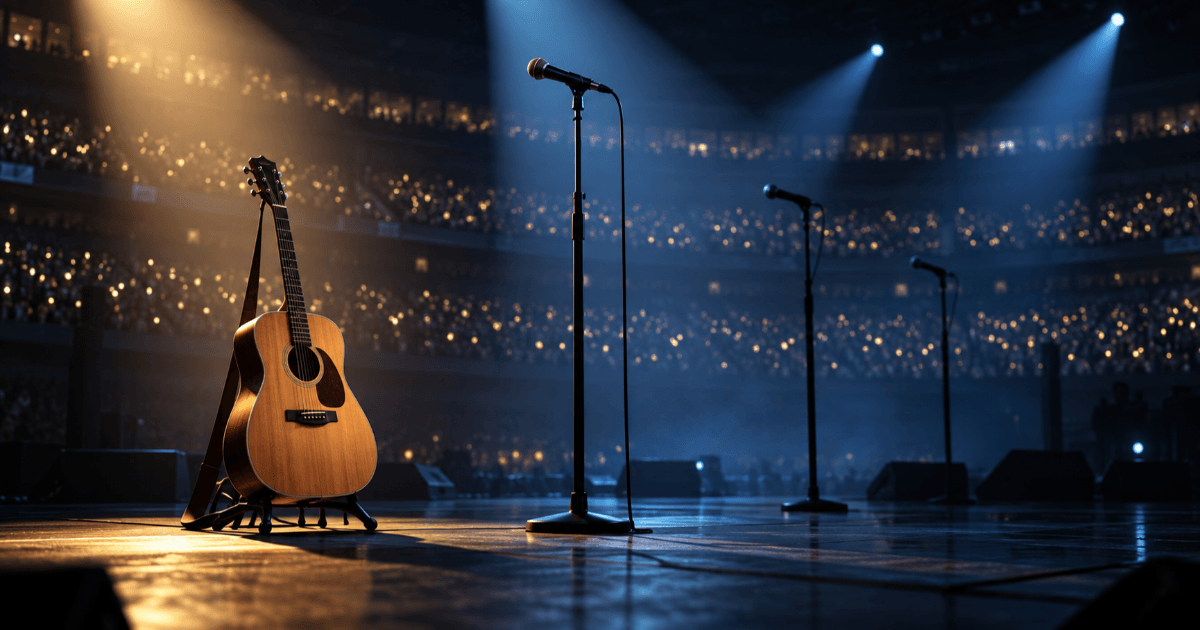
Who will stand in front of the open mic next? Equally important is under what conditions they can stand, which is now being questioned.
Source URL
-
Reference BBC for the background of Macklemore's removal, Sheeran's statement, co-performers' withdrawal, and expert opinions. The text is confirmed in the provided attached materials.
https://www.bbc.com/news/articles/cm17jz89rxevo -
Reddit "r/Fauxmoi": Reactions to Macklemore's pro-Palestine speech. Introduces the gist of support comments that could be confirmed. Not a representative material of overall public opinion.
https://www.reddit.com/r/Fauxmoi/comments/1w8lu1i/macklemore_gives_propalestine_speech_before_ed/ -
Business Insider: Overview of the tour controversy. Refer to the summary of the report obtained on P!nk's critical reaction.
https://www.businessinsider.com/ed-sheeran-loop-tour-macklemore-controversy-explained-2026-9 -
People: The matter of Macklemore announcing a donation of $1 million of the tour's net proceeds to six organizations supporting Palestine. Refer to the summary of the report obtained.
https://people.com/macklemore-donate-1m-ed-sheeran-tour-earnings-palestinian-relief-orgs-12124960