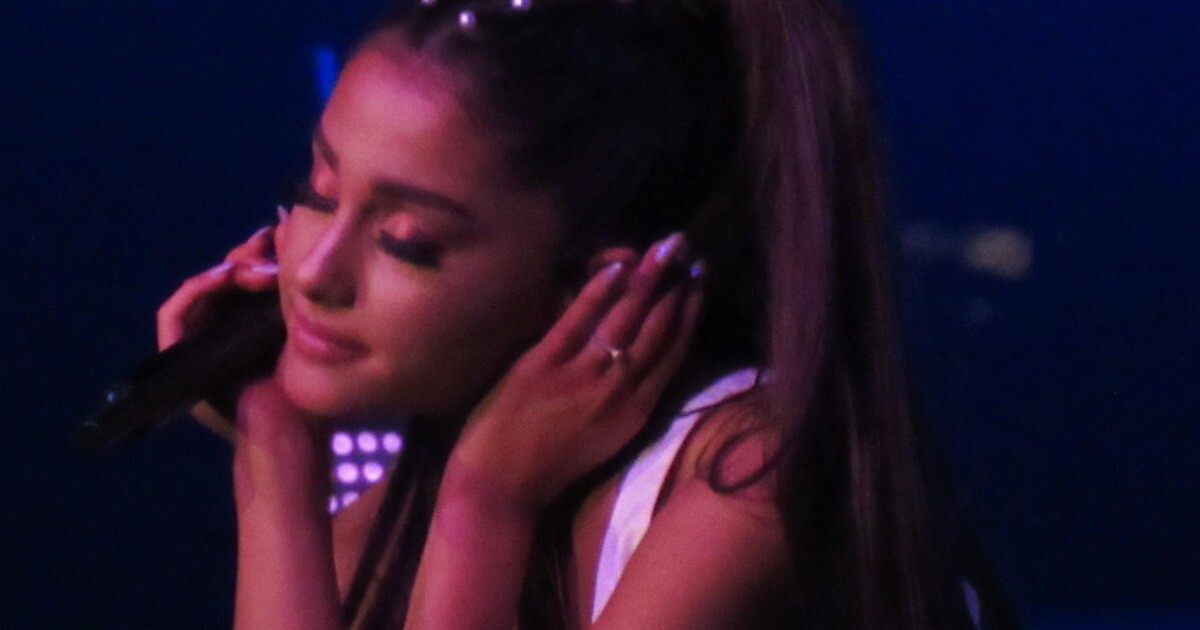
Global pop star Ariana Grande has taken legal action against anonymous individuals alleged to have stolen her unreleased music, photos, and videos.
According to reports, the lawsuit was filed on July 27, 2026, in the Los Angeles County Superior Court. The identities of the defendants have not been disclosed at this time, and they are listed as "John Doe" in the lawsuit, indicating unknown individuals.
Ariana's side claims that the defendants targeted not only her personal accounts but also the digital environments of producers, photographers, and technical staff she has worked with, obtaining private data over many years.
The stolen items reportedly include unfinished demo tracks, unreleased masters, recording session videos, music videos, behind-the-scenes footage from photo shoots, and unused cuts from album photoshoots.
This situation cannot be simply described as a "leak of new songs." The lawsuit outlines a serious scenario where the boundary between the artist's creative process and personal life has been continuously violated from the outside.
Claims of 45 songs leaked in 2023 alone
The lawsuit highlights that in 2023 alone, 45 of Ariana's unreleased songs were hacked, stolen, and leaked online.
Furthermore, it is claimed that similar leaks have occurred hundreds of times since she began her music career in 2011.
For music fans, unreleased tracks are a source of great curiosity. Some believe they offer a glimpse into the artist's creative process, with lyrics different from the final album, unused melodies, and early-stage vocals.
However, from the artist's perspective, demos are not finished products.
There might be plans to rewrite the lyrics or offer the song to another singer. Some tracks may have been created for movies or TV shows and were never intended to be released under her name. If unfinished works are released against the artist's will, listeners might mistakenly perceive them as "official works."
According to the lawsuit, the leaks forced Ariana to re-record some materials and alter the release schedule for future projects.
The leak of works doesn't just reduce streaming sales. It disrupts plans that have been prepared over months or even years, including the overall structure of an album, the order of single releases, music video direction, promotional plans, and contracts with collaborators.
Once data is on the internet, it is difficult to completely retrieve it. Even if a deletion request removes the initial post, duplicated files can spread to other social networks, video sites, cloud storage, and messaging apps.
In this sense, the damage from leaks is not a one-time event but can be repeated over a long period.
The target was not just her but "those around her"
An important point highlighted by the lawsuit is that the attackers did not solely target Ariana herself.
According to the reported lawsuit details, in 2019, the credentials of a Dropbox account belonging to a photographer who had previously worked with Ariana were illegally obtained, and unpublished photos were downloaded.
In the following year, 2020, a producer's mobile device involved in joint production was compromised, and master recordings, demos, and recording session videos in progress were stolen.
Furthermore, in 2024, attackers allegedly created a Gmail account and fake domain posing as a photographer to contact digital technical staff. This is a phishing and impersonation technique, making it appear as a legitimate request from an official contact to send Ariana's private content.
Many people are involved in the works of a global artist.
Not only songwriters, composers, producers, engineers, and managers but also photographers, video directors, editors, dancers, stylists, and representatives from record labels and advertising companies may have access to pre-release materials.
Even if the artist's security is robust, if one of the collaborators is deceived, data can be leaked externally. For attackers, it may be easier to find relatively weak routes around the most famous person rather than attacking them head-on.
This incident highlights the need for security measures that include not only password management by the artist but also all parties involved in the production to protect the works.
How stolen content becomes a "commodity"
The lawsuit claims that the obtained data was not simply released for amusement but was sold to third parties.
The defendants are alleged to have bundled stolen audio and photos into multiple data sets and sold them using third-party payment services. Some were reportedly traded at high prices on the dark web.
Rare unreleased songs can fetch high prices from enthusiastic collectors.
Sometimes the initial buyer enjoys the content alone, while in other cases, multiple fans pool funds to reach a target amount and then publicly release the audio, similar to a "group purchase."
In this system, as long as there are people seeking leaked data, there is a financial incentive for those who steal it.
Focusing solely on hackers won't eliminate the market if buyers and distributors don't decrease. Purchasing, reposting, and spreading links to audio known to be illegally obtained can fund the next attack.
The issue surrounding leaked audio is not just a matter between attackers and victims. There are multiple participants, including those who mediate sales, purchasing fans, accounts redistributing files, and posters who use the topic to gain access.
Past leaks spread on TikTok
Ariana has previously expressed strong discomfort over the leak of unreleased songs.
One widely known incident involves the unreleased song "Fantasize," which leaked online in 2023 and was subsequently widely used on TikTok.
In a 2024 interview, Ariana explained that this song was not created to be released as her official work but was made for a different TV project.
On the internet, it was treated as a high-quality "new song by Ariana," but for her, it was a work she had not decided to release.
She also commented on another unreleased song used in a TikTok post, expressing regret over the leak as she might have used part of it in a different form in the future.
When a work is released at a stage where the artist has not yet decided, it limits the options to complete the song or incorporate it into another work.
Fans sometimes suggest that leaked songs should be officially released, but once a work has spread in a way the artist did not intend, it cannot always be commercialized as is.
Support on social media: "It's only right to sue"
When the lawsuit was reported, opinions supporting Ariana's response flooded social media and international forums.
In a Reddit community for music fans, comments such as "Given how long the leaks have continued, legal action is necessary" and "Even if it's difficult to identify all the culprits, the lawsuit should serve as a deterrent" were observed.
There was also a post comparing the leak of works to displaying an unfinished painting without the artist's permission.
Opinions were prominent that being a celebrity and economically successful does not mean it's acceptable to have unfinished works or private photos stolen.
The stolen items reportedly include not only music but also photos and videos. Therefore, the response is spreading that it should be considered an issue of privacy and consent, not just copyright or sales opportunities.
Even users who claim not to have any special affection for Ariana have posted opinions that content obtained against her will should not be viewed or consumed.
"Weren't fans also supporting the leaks?"
Meanwhile, some fans' actions have come under scrutiny on social media.
In past leaks, it has been pointed out that fans pooled funds to purchase unreleased songs and then spread the audio after obtaining it.
Following the recent reports, posts have emerged with sentiments like "The market doesn't exist just because hackers have the files" and "As long as there are people paying and spreading, the next works will be targeted."
It might be natural for fans to want to hear unreleased songs. However, if it is known that the audio was stolen through unauthorized access or impersonation, playing or sharing it contributes to the expansion of the damage.
Even without directly posting links to leaked files, spreading song titles or using short audio clips in videos can widely publicize their existence.
Social media algorithms tend to spread content with more reactions. Even if the purpose is to criticize the leak, attaching the audio itself and spreading it could inadvertently aid the attackers' goals.
Actions intended to support the artist can end up depriving them of the right to release their works. This lawsuit has also highlighted the contradictions within fan culture.
Questions about identifying the culprits
While there is much support for the lawsuit, questions have arisen on social media about whether a lawsuit can proceed without knowing the defendants' identities.
In the United States, lawsuits can be filed using a placeholder name when the defendant's identity is not yet known.
Through the legal process, one objective is to request information disclosure from internet service providers, payment companies, email services, cloud services, etc., to trace the defendants' identities from IP addresses, account information, and transaction records.
Of course, if anonymization technology, overseas services, or cryptocurrencies are used, identification is not easy. Records may not be saved, or multiple individuals or accounts may be involved.
Still, by filing a formal lawsuit, there is a possibility of accessing information that cannot be obtained through private investigation alone.
Ariana's side seeks not only to identify the defendants and hold them accountable but also to demand the return of the private data they possess and an order prohibiting future use or disclosure. It has been reported that a jury trial is also being requested.
It should be noted that the contents of the lawsuit at this stage are the plaintiff's claims, and the defendants' identities and responsibilities have not been confirmed by the court.
Questions about management systems
While acknowledging the damage to Ariana's side, there are opinions on social media that the management methods at the production site should be reviewed given the extent of the data leaks.
There are many possible measures, such as minimizing sharing on the cloud, limiting the number of people who can access confidential data, requiring multi-factor authentication, and verifying identity through alternative communication methods for external file transfer requests.
However, the argument that "it was stolen because it wasn't well protected" should not be a reason to lessen the attackers' responsibility.
No matter how advanced the security is, it is difficult to completely prevent attacks that exploit human relationships and trust. Especially with tactics that pose as legitimate business partners and demand urgent responses, not only technical defenses but also education and verification procedures for all involved are crucial.
In the music production scene, speed is also required. It is not easy to balance convenience and security when staff worldwide need to share audio and video in a short time.
This lawsuit may prompt record companies and production companies to review their data-sharing systems, including external staff.
It's not just sales that are lost
When discussing leak incidents, attention tends to focus on the amount of damage and sales opportunities.
However, what artists lose is not just money.
Deciding who to let hear a work in progress, when to complete it, or whether to keep it unreleased is also part of the creative process.
Unfinished vocals include recording failures and trial and error. Unused cuts from photo shoots may contain expressions or outfits the artist does not want to disclose. Behind-the-scenes footage can only be released after editing and verification.
Releasing these without the artist's consent is not just copying files. It is also taking away the artist's right to decide how to express themselves.
The lawsuit claims that the leaks have disrupted not only creative activities and work relationships but also the sense of security that one's livelihood is safely protected.
The situation where one must consider "this data might be stolen too" during every recording and shoot would impose a significant psychological burden on creativity.
The "trust" between artists and fans is questioned
Artists deliver completed works to fans at a timing and method of their choosing.
Fans receive the work, share their impressions, attend live performances, and wait for the next activity. This relationship is not just a simple product-consumer relationship but is built on a certain level of trust.
The leak of unreleased songs forcibly changes that order.
Songs not planned for release are known first, and even if the completed version is released, it is compared to the leaked version. Photos and videos spread without context, and evaluations and speculations spread before the artist can explain.
Ariana's side reportedly hopes to use this lawsuit as a deterrent not just for herself but for many artists who suffer similar damage.
It is still unknown whether the defendants' identities will be revealed and what responsibilities will be recognized through the trial.
Nevertheless, the questions raised by this lawsuit are clear.
Is everything available on the internet free to view, listen to, and share? Does being a fan justify seeking works ahead of the artist's intentions? And how should society protect creative works that exist as digital data?
Even a small choice not to listen to unreleased songs can help protect an artist's right to manage their works.
This legal battle is not just about pursuing anonymous hackers. It is an event that questions how creators and receivers of music build relationships in the digital age.
Source URLs
KYMA: An article reporting on the lawsuit. It conveys that Ariana Grande has taken legal action after her unreleased music, photos, and videos were stolen.
https://kyma.com/news/national